Reconstitution Calculator
Pull the syringe to
Concentration 5.00 mg/ml
Doses per vial 30
Needs 3 mL of bacteriostatic water — a 10 mL vial ($20) covers 3 reconstitutions. Bacteriostatic water ›
Supplies for Reconstitution
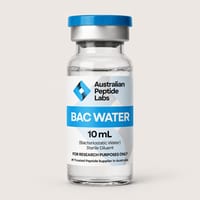
Bacteriostatic Water
$20The diluent this calculator assumes, in a 10 mL vial.
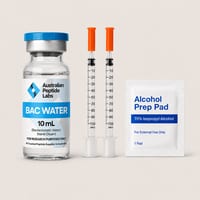
Research Starter Kit
$35One bacteriostatic water vial, four insulin syringes and four alcohol prep wipes, covering the syringe and diluent inputs above.
Reconstitution best practices — technique, diluent selection and post-reconstitution storage in more depth than the guidelines below.
Calculate the resulting concentration when reconstituting lyophilised peptides with bacteriostatic water or other diluents. Enter your peptide mass and diluent volume to determine the solution concentration.
How to Use This Calculator
- Syringe Volume — Select the size of your insulin syringe (0.3 mL, 0.5 mL, or 1.0 mL).
- Peptide Vial Quantity — Enter the total amount of lyophilised peptide in milligrams (mg), as stated on the vial label.
- Bacteriostatic Water — Enter the volume of bacteriostatic water you plan to add, in millilitres (mL).
- Desired Dosage — Set the dose in micrograms (mcg) you wish to draw per injection.
Reconstitution Guidelines
- Use bacteriostatic water (BAC water) as the preferred diluent for multi-use reconstitution — its benzyl alcohol preservative is what allows repeated withdrawals from one vial, unlike plain sterile water.
- Direct the stream of diluent against the glass wall of the vial — do not inject directly onto the lyophilised powder.
- Gently swirl the vial until the peptide is fully dissolved. Do not shake.
- Store reconstituted peptides at 2–8 °C (refrigerated). Use within 28 days of reconstitution.
- Use sterile technique throughout the process to prevent contamination.
Disclaimer
This calculator is provided as a reference tool for research purposes only. All peptides sold by Australian Peptide Labs are intended for laboratory research use only and are not for human consumption. Always follow your institution's protocols and safety guidelines when handling research compounds.