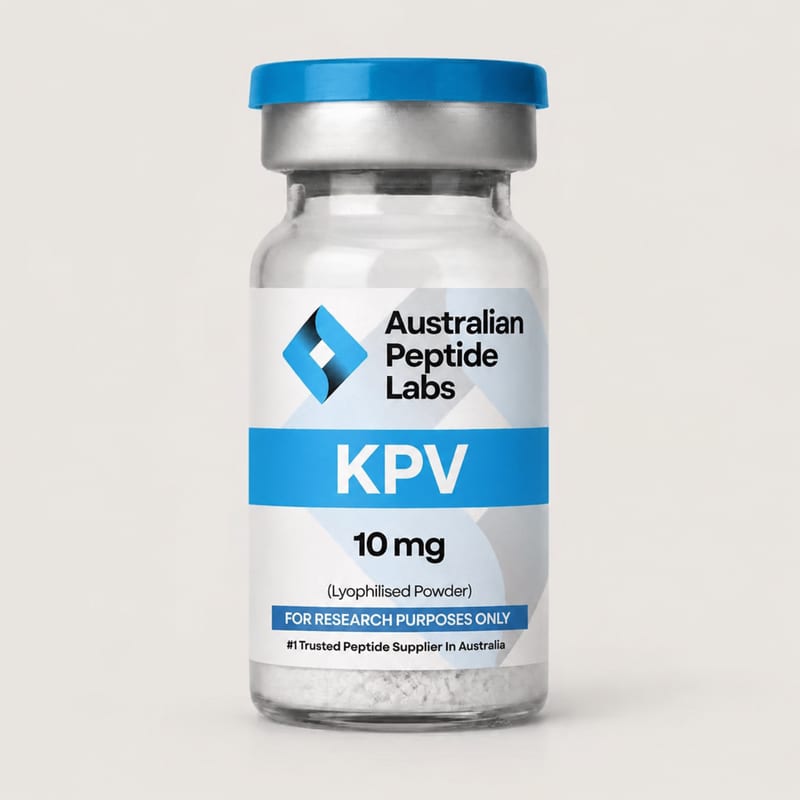
KPV
Research Grade
$65
$65.00
1 × $65.00 pick 2 and save $6.50
Buy More Save More
Same day dispatch · free express shipping over $250
Certificates of Analysis
All certificates →Current batch · on shelf
99.66%
Purity by HPLC · identity confirmed by MS
22 August 2026
- Batch
- APL-KPV10-2608-03
- Net content
- 10.06 mg
- Specification
- ≥98.0% purity · passes
Every batch is analysed in-house by HPLC and mass spectrometry and ships with a batch-specific Certificate of Analysis. Independent third-party verification is added to select batches; none is published for KPV yet.
Molecular Details
Every batch is analysed in-house by HPLC & mass spectrometry and ships with a Certificate of Analysis; select batches are additionally verified by an independent third-party laboratory.
Usage & Storage
Description
C-terminal α-MSH tripeptide fragment. Studied in NF-κB inhibition, inflammatory bowel and wound-healing models without melanocortin activity.
- Tripeptide C-terminal fragment of α-MSH (residues 11-13)
- Studied in NF-κB and NLRP3 inflammasome inhibition
- No melanocortin receptor activation — no pigmentary activity
- Investigated in intestinal and dermatological inflammation models
- Research Grade purity >=98%
KPV is a tripeptide with the sequence Lys-Pro-Val, identified by CAS number 67727-97-3. It corresponds to residues 11-13 at the C-terminus of alpha-melanocyte-stimulating hormone (α-MSH), and is the shortest fragment of that hormone shown to retain its anti-inflammatory profile in preclinical models. Critically for research use, KPV does not activate the melanocortin receptors responsible for the pigmentary and appetite activity of the parent hormone, which allows the inflammatory signalling pathway to be studied in isolation. Research has characterised its inhibition of NF-κB nuclear translocation and NLRP3 inflammasome activation at nanomolar concentrations, together with downstream suppression of pro-inflammatory cytokine output in intestinal epithelial and keratinocyte models. Studies have investigated KPV in inflammatory bowel disease models, wound-healing research and dermatological inflammation, and have noted unusual stability for a peptide of its size. Supplied as a lyophilised white powder with a molecular weight of 342.4 Da and molecular formula C16H30N4O4. Supplied strictly for in-vitro laboratory research. Not for human or veterinary consumption.
Frequently Asked Questions
Is KPV legal to buy in Australia?
KPV is supplied strictly as a research chemical for in-vitro laboratory use. It is not approved for human therapeutic use in Australia and is not for human or animal consumption. Researchers are responsible for compliance with Therapeutic Goods Administration (TGA) regulations and their institution's protocols.
What purity is KPV?
We specify ≥98% purity — the High-Tier Research Grade (commercial RUO) standard. Every batch is analysed in-house by HPLC and mass spectrometry and ships with a Certificate of Analysis; select batches also undergo independent, third-party purity verification.
Does KPV ship with a Certificate of Analysis (COA)?
Yes — every batch ships with a batch-specific COA documenting HPLC purity and mass-spectrometry identity. 3 KPV batch certificates are published in full at australianpeptidelabs.com.au/certificates/kpv, so the analysis can be read before ordering and the batch number printed on the vial matched against it.
Where can I buy KPV in Australia?
KPV can be ordered here from Australian Peptide Labs for in-vitro research use, dispatched same day from within Australia with a COA included.
Do you provide dosing or administration guidance for KPV?
No. As these compounds are supplied for laboratory research only, we do not provide dosing or administration protocols. Our research library covers reconstitution and concentration calculations for in-vitro work.